first published in 48 hills, January 22, 2026
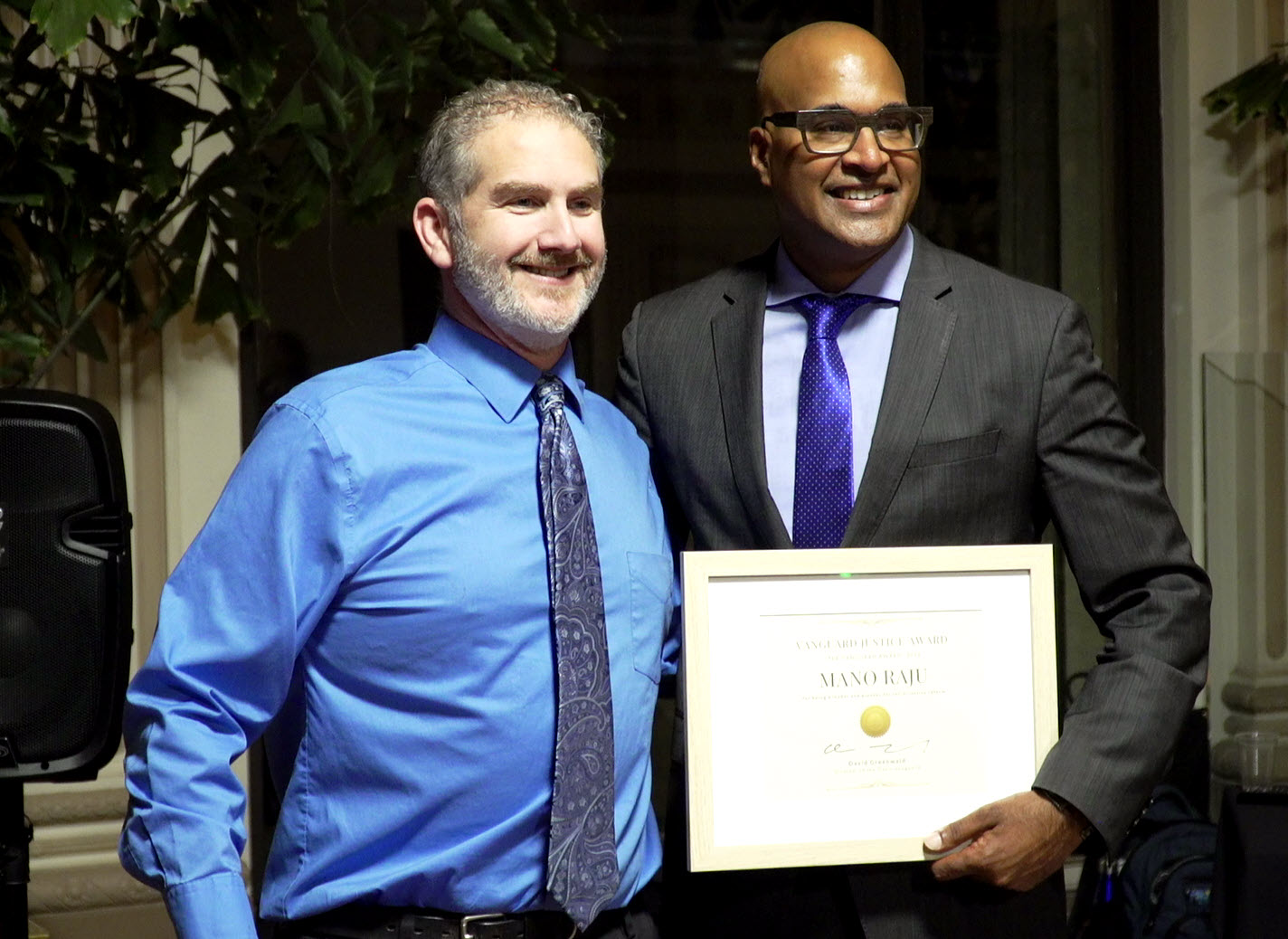
David Greenwald of the Davis Vanguard with San Francisco Public Defender Mano Raju, at the 2022 Vanguard Justice Awards in Sacramento.
Justice Over Compliance:
Saying No to an Order That Harms Others
by Matt Gonzalez
Last week a judge in San Francisco ordered the public defender to accept appointment in all arraignments in felony cases at the Hall of Justice. In May of 2025, the Public Defender’s office alerted the Presiding Judge of the Superior Court that it could not do so because the number of active pending felony cases had increased by 55% in the last few years (and 78% in misdemeanors). These numbers are from the Superior Court’s own dashboard, which tracks the data.
Because a conflict of interest is created when a public defender’s excessive caseload forces them to choose between the rights of various indigent defendants they are representing, the public defender’s office, although continuing to take the majority of new arraignments, began declaring it was unavailable in some, necessitating the appointment of private attorneys in those cases. While the most recent city budget did not expressly cut positions in the public defender office, it did require attrition goals (also known as salary savings) of 2.8 million, meaning we would have to leave 17 felony attorney positions vacant, for the entire year, to meet these targets, thus exacerbating the staffing shortage.
Our Mayor has prioritized addressing crime and the cleanliness of city streets, which is certainly his prerogative. However, there are downstream consequences to increasing prosecutions. Our district attorney certainly is empowered to decide what new cases to charge, and what plea bargains her office approves to settle a matter without a trial. But if accused persons reject those pleas and want a jury trial, again, there are financial and staffing consequences. City Hall seems to know this, last year, city leaders approved 92 million new dollars for police overtime. Meanwhile, although national workload standards say the public defender needs 41 new attorney positions to deal with the crisis, the office received no new felony attorney positions (the Public Defender currently is asking for 8 new positions to start addressing shortfalls).
Something has to be done. Attorneys are already working at capacity, and unlike police officers they are exempt from overtime pay even if they work extra hours. Judge Dorfman, a former prosecutor who has never worked in a public defender office or led a legal law office of any size, believes he’s better situated to decide whether the elected Public Defender, Mano Raju, can take on more cases. However, Dorfman is focused on felony cases, while Raju must also manage staffing in federal immigration court cases, mental health matters, youth defender cases, misdemeanors, post-conviction relief matters, diversionary courts, etc.
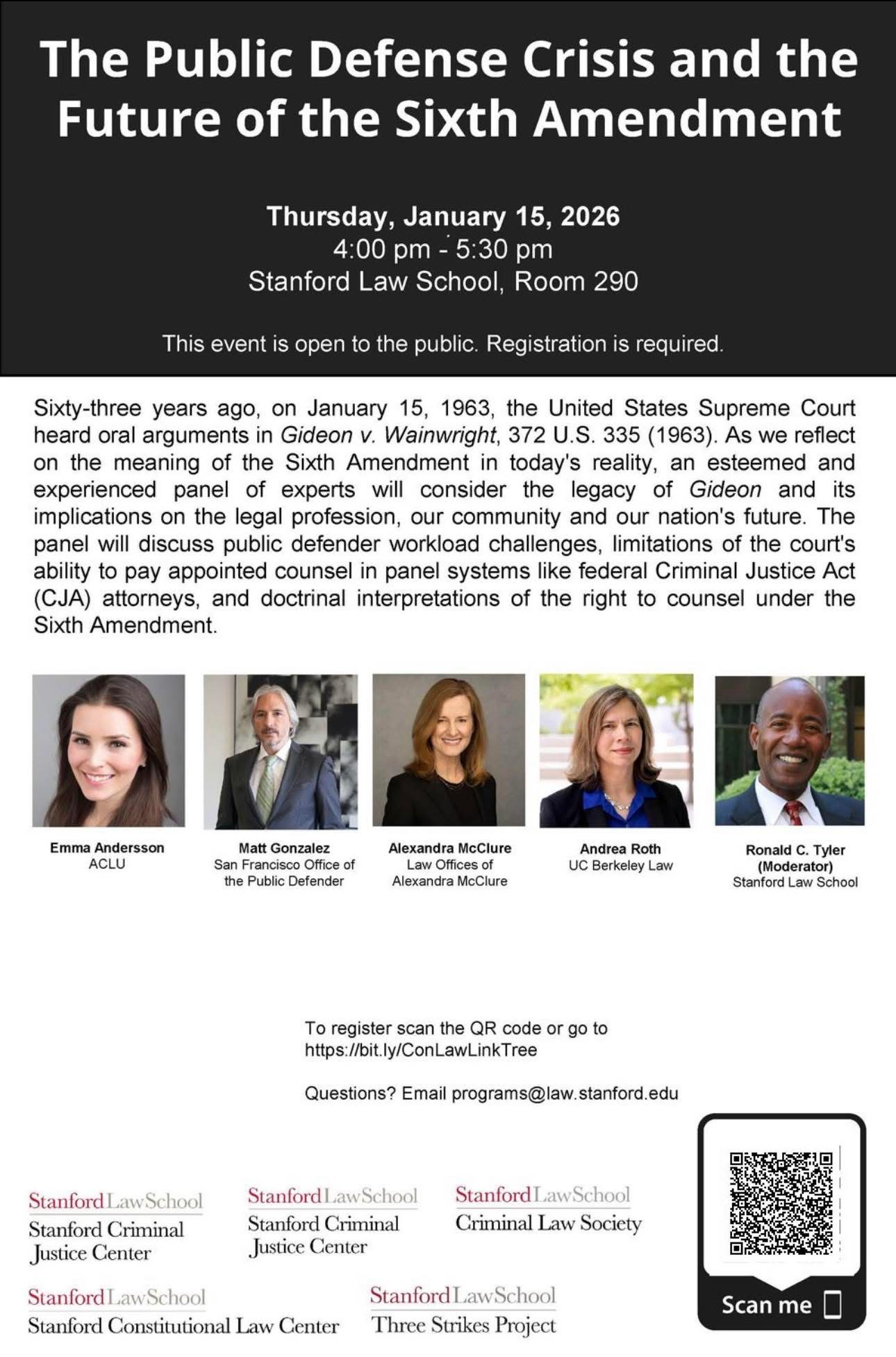
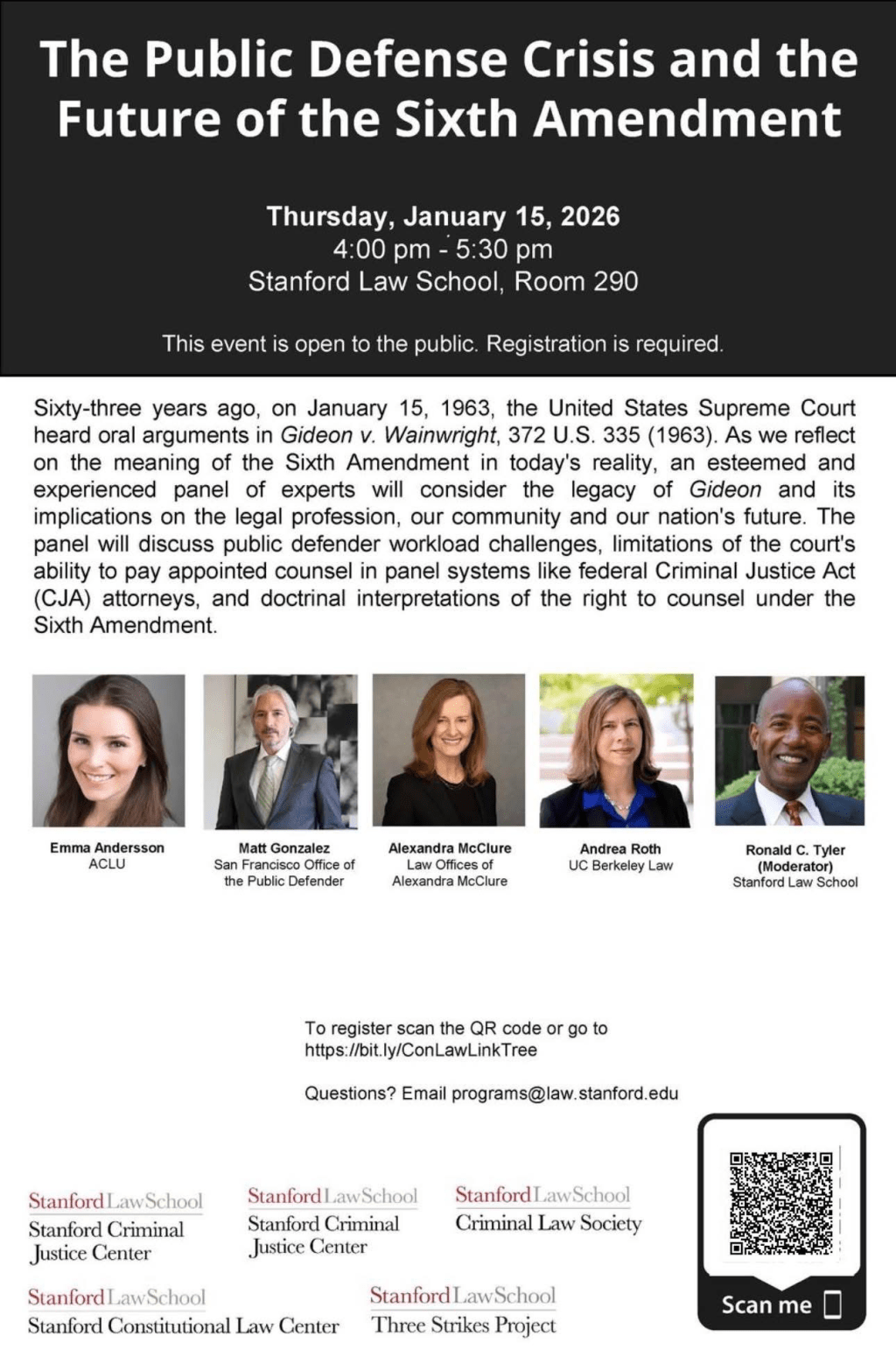
Flyer for an event at Stanford Law School addressing Sixth Amendment issues and the workload crisis facing many public defender offices around the country.
To highlight the challenges the Public Defender office faces, its immigration unit of 7 lawyers can only take on about 5%-8% of the eligible detained removal cases. That means over 90% of eligible clients are left without counsel. This has enormous impacts on these individuals, their families, and communities. Research shows that someone facing deportation is five times more likely to prevail than those who are unrepresented. (Good news: the office recently secured 3 new immigration attorney positions from a private foundation).
Judge Dorfman has taken offense at our refusal to obey his order. But complying with it harms others: it means current clients have an attorney who cannot devote the necessary attention to their case. It means our attorneys are working overtime without pay and forces them to choose between serving their clients and ignoring their families and own work-life balance. It means harming the new client who may want to proceed by asserting their rights to a speedy trial, but cannot because their lawyer is overloaded.
The Washington State Supreme Court recently agreed that public defender offices had to be better staffed and that jurisdictions had to begin the process of improving the historic inequities between law enforcement and public defender office budgeting. When attorney workloads are excessive they effectively compel attorneys to violate legal and ethical obligations and render the assistance of counsel illusory.
Dorfman’s order asks us to harm others. Meanwhile, he has issued no order to City Hall to fund our office. What would you do?
–Matt Gonzalez is the chief attorney of the San Francisco Public Defender’s Office. He is a former president of the Board of Supervisors.
Originally published in 48hills.org under the title “Why the Public Defender’s Office can’t take all the felony cases the Superior Court is forcing on us.”


 Art & Politics: The Matt Gonzalez Reader
Leave a comment