first published in Plastic Antinomy: Visual Arts Quarterly, Spring 2008
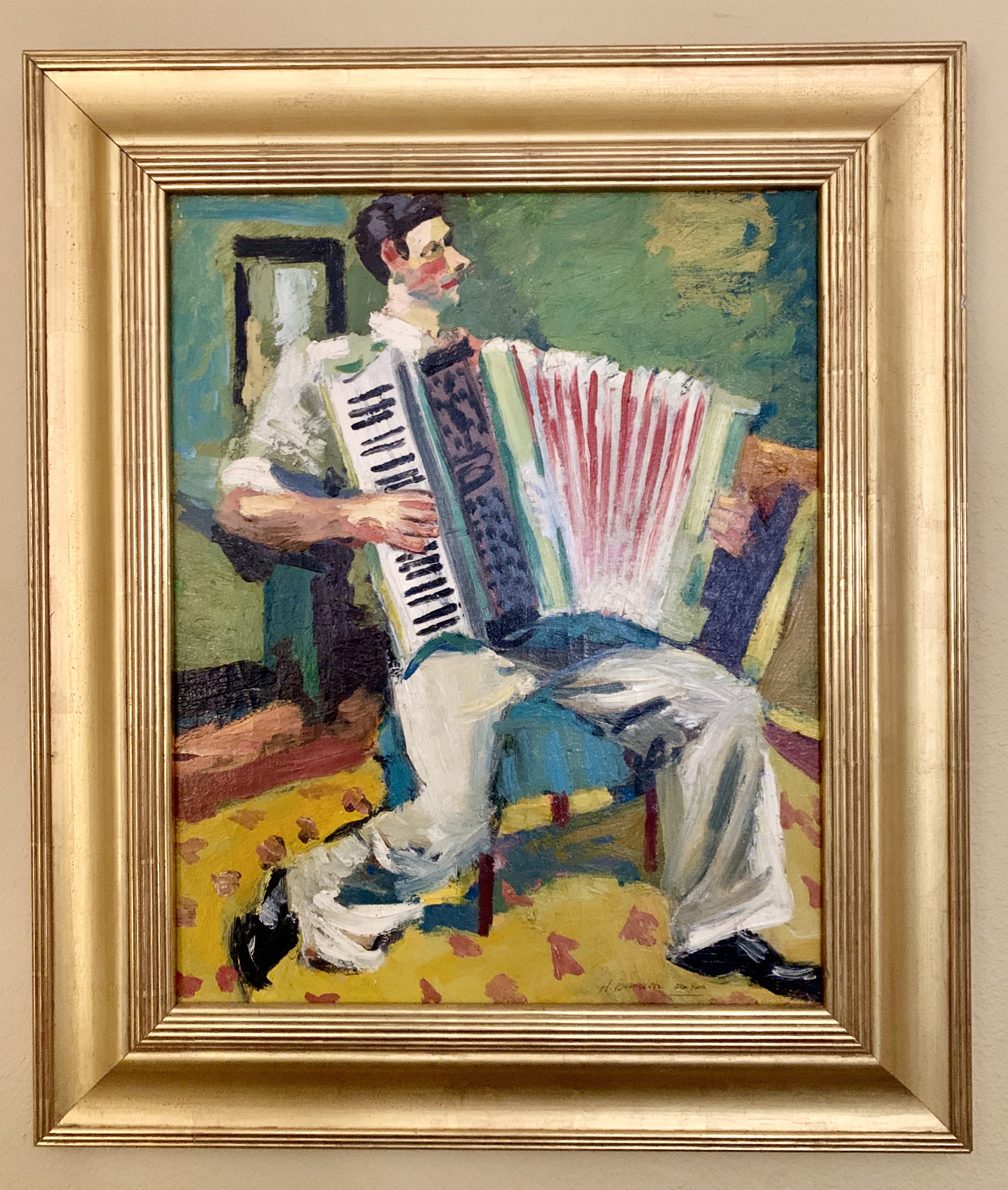
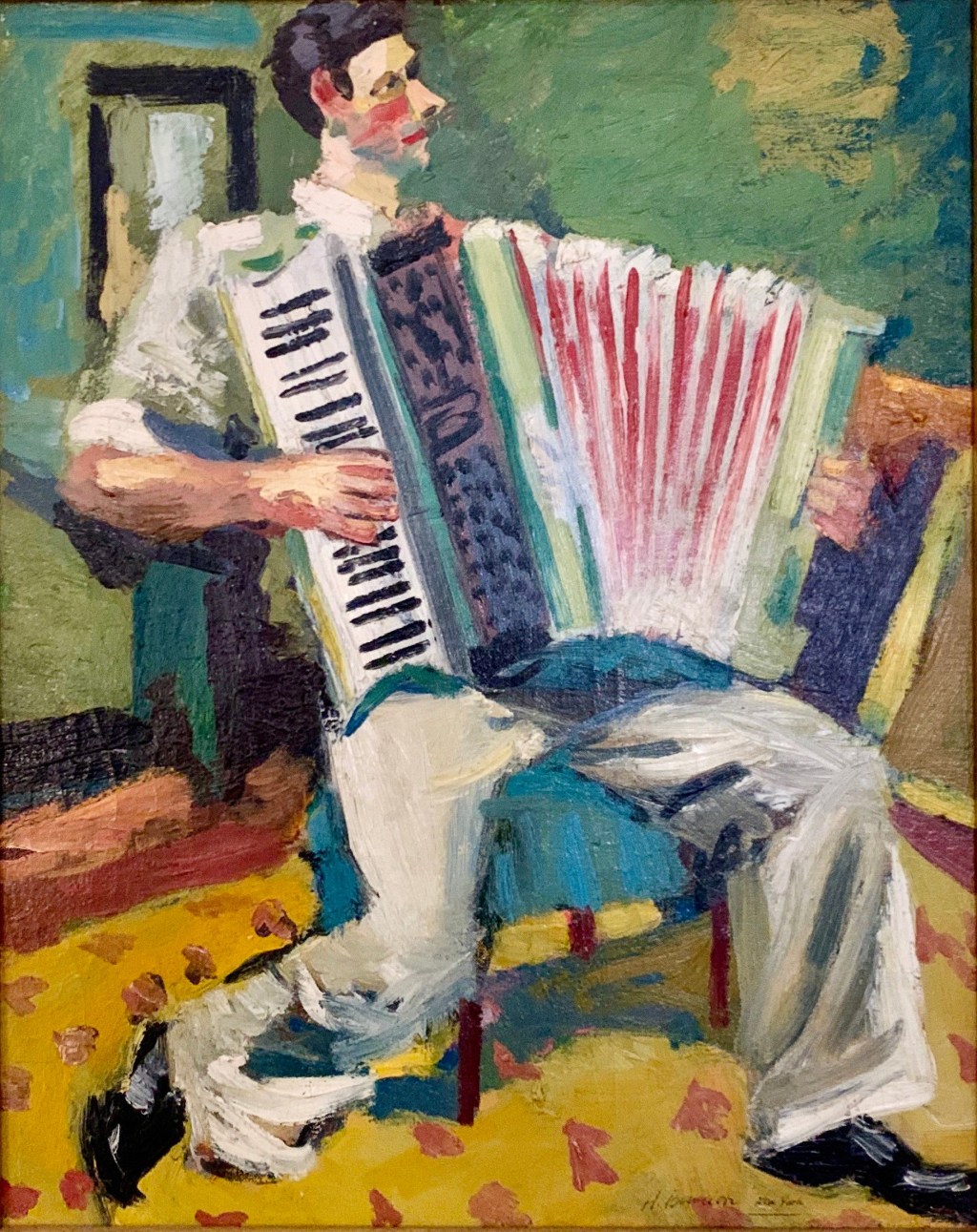
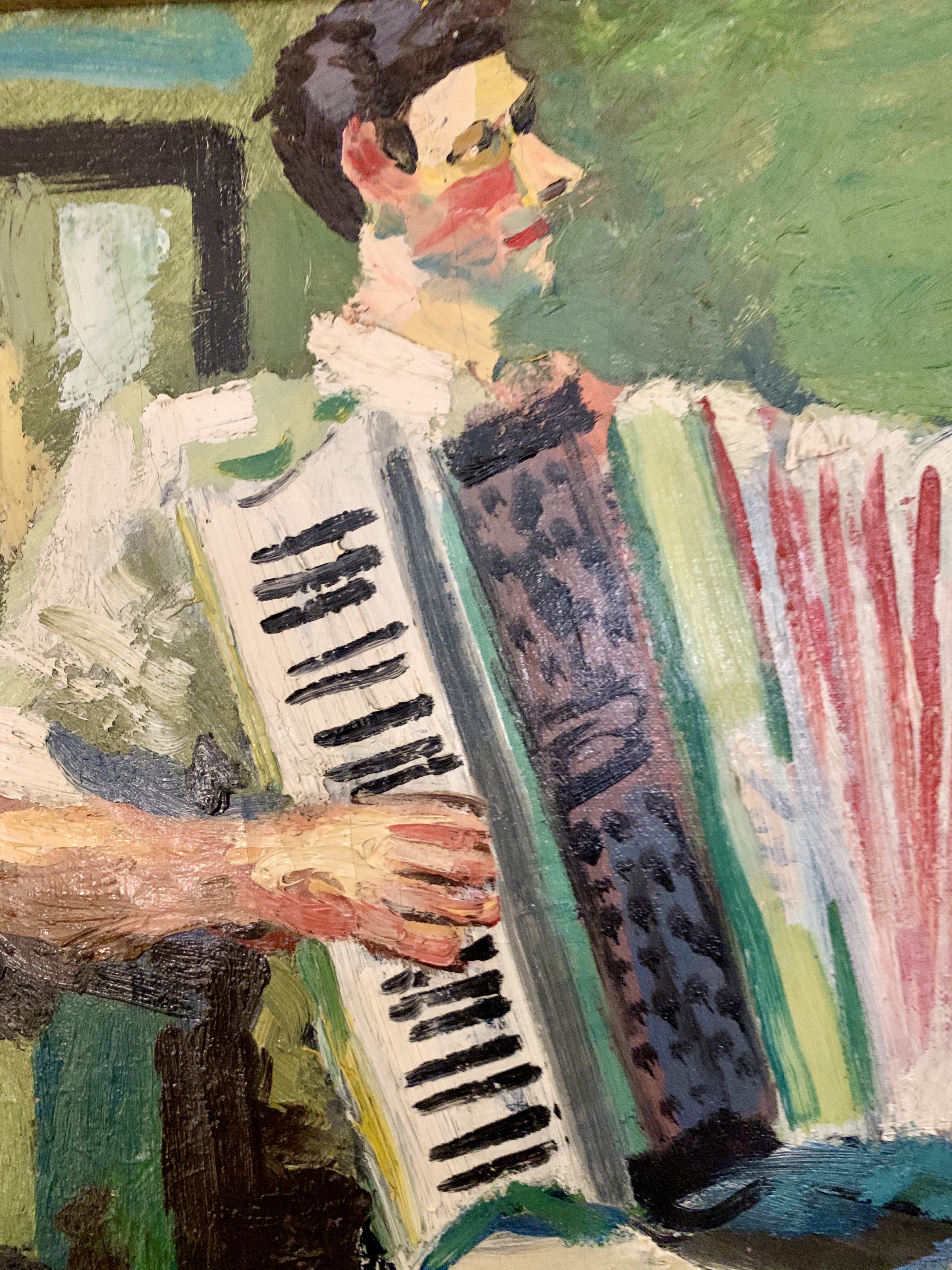
The Accordion Player by Harry Bowden, oil on canvas, c. 1934
HARRY BOWDEN’S ACCORDION PLAYER by Matt Gonzalez
WHEN I FIRST SAW THIS PAINTING it seemed old and stiff. It didn’t instill any kind of excitement in me.
I was at the Charles Campbell Gallery on Chestnut Street, just down the street from the San Francisco Art Institute where I was teaching a course in Art & Politics, when I first saw it. It was my custom to walk down the hill after teaching and hangout at the gallery talking with Charlie or his then gallery director Steve Lopez. I had seen Harry Bowden (b. 1907-65) paintings before. He was a Southern California native who studied with Hans Hoffman one summer at UC Berkeley after graduating from the Chouinard School of Art in Los Angeles.
Later, Bowden followed Hoffman to New York City where he fell in with the WPA artists. He painted murals for the Williamsburg Housing Authority and worked on another project led by Fernand Leger with contemporaries Willem de Kooning and George McNeil.
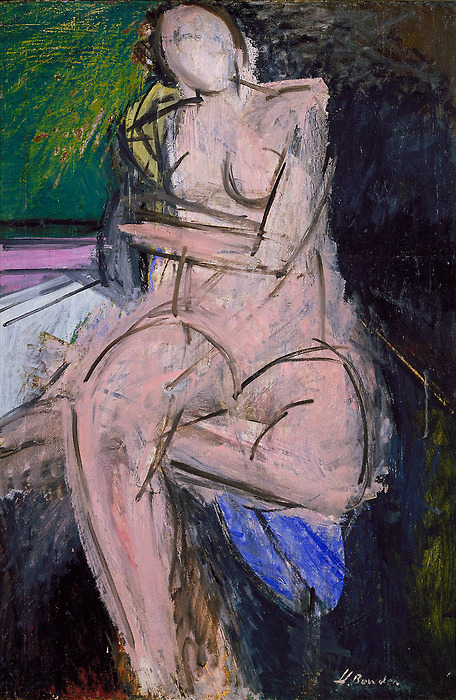
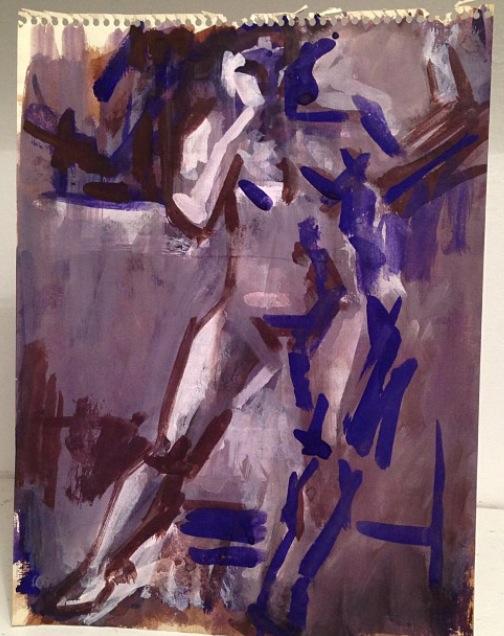
Harry Bowden, Nude, 1936-37, oil on canvas, Smithsonian collection.
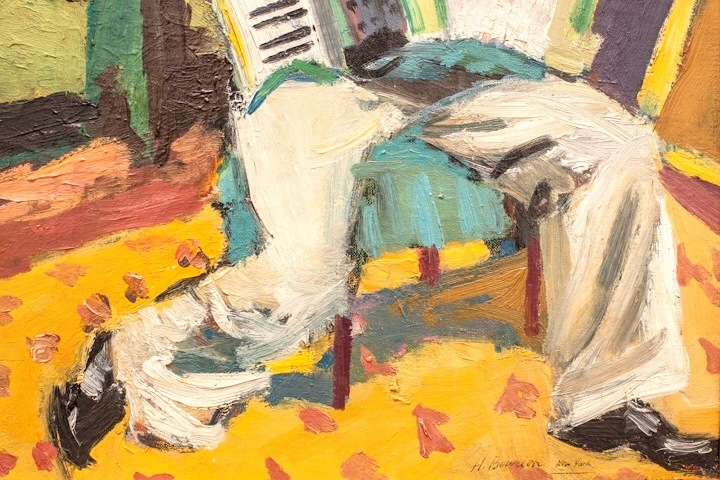
The Bowden work I was most accustomed to seeing was fully abstract. In fact, Bowden had been a founding member of the American Abstract Artists (1936-39). Gradually, he moved away from purely geometric nonobjective work and created abstractions having a Cezanne-like distortion to them. Landscapes and cubist-influenced figures eventually came to predominate his work. So I was a bit surprised to encounter this awkward painting of an elongated accordion player, leaning up against a bookshelf at the Campbell Gallery. I was intrigued to learn it was by Bowden (undated but signed “Harry Bowden New York”) and that it must have prefigured his work with the American Abstract Artists, but otherwise it did little for me. I understood that one of the gallery’s patrons had brought it in as partial payment toward another, more expensive, painting. In any event, I hardly glanced at it.
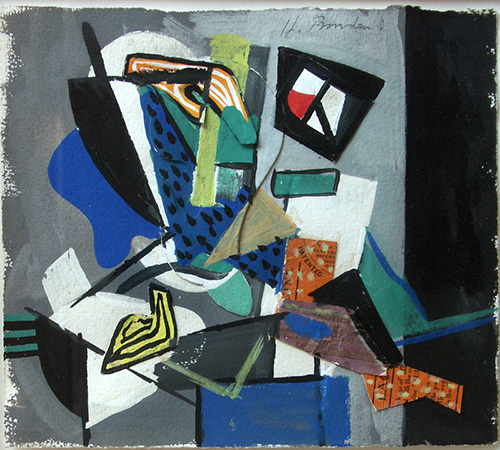
Harry Bowden, untitled, mixed media, tempera and collage on paper, 6″ x 7″, 1938. Collection of the Art Resource Group.
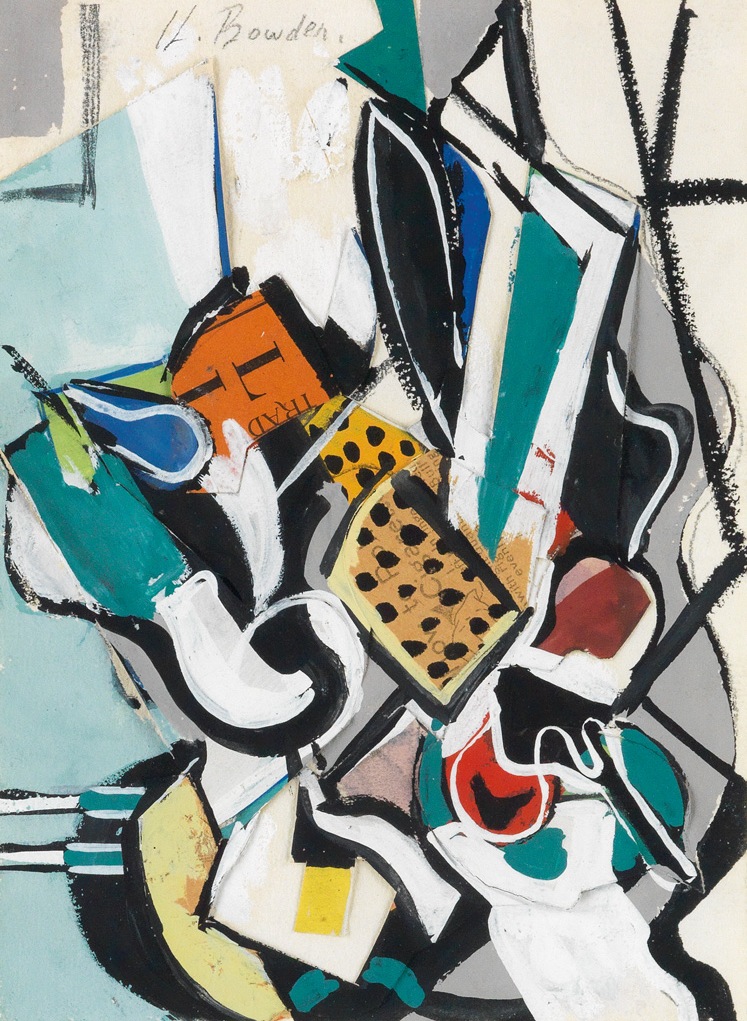
Harry Bowden, untitled still life, mixed media, gouache and collage on paper, 8″ x 5 3/4″, c. 1937. Collection of Martin Diamond Fine Art.
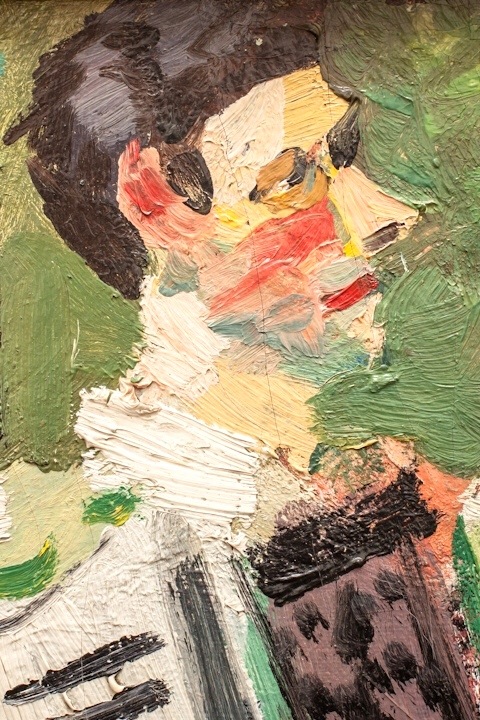
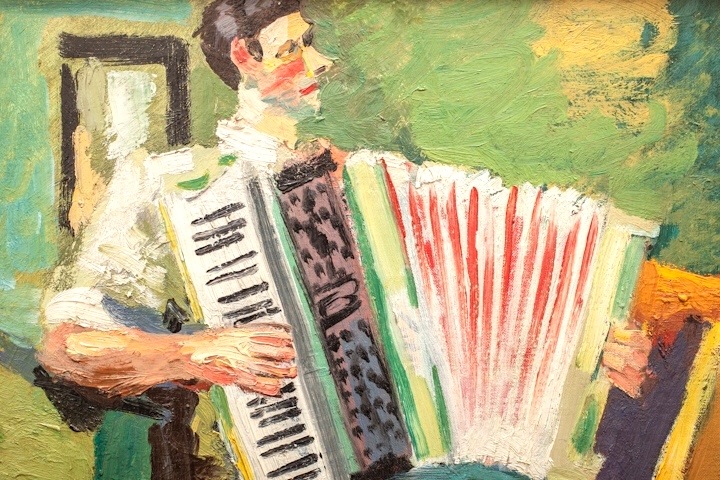
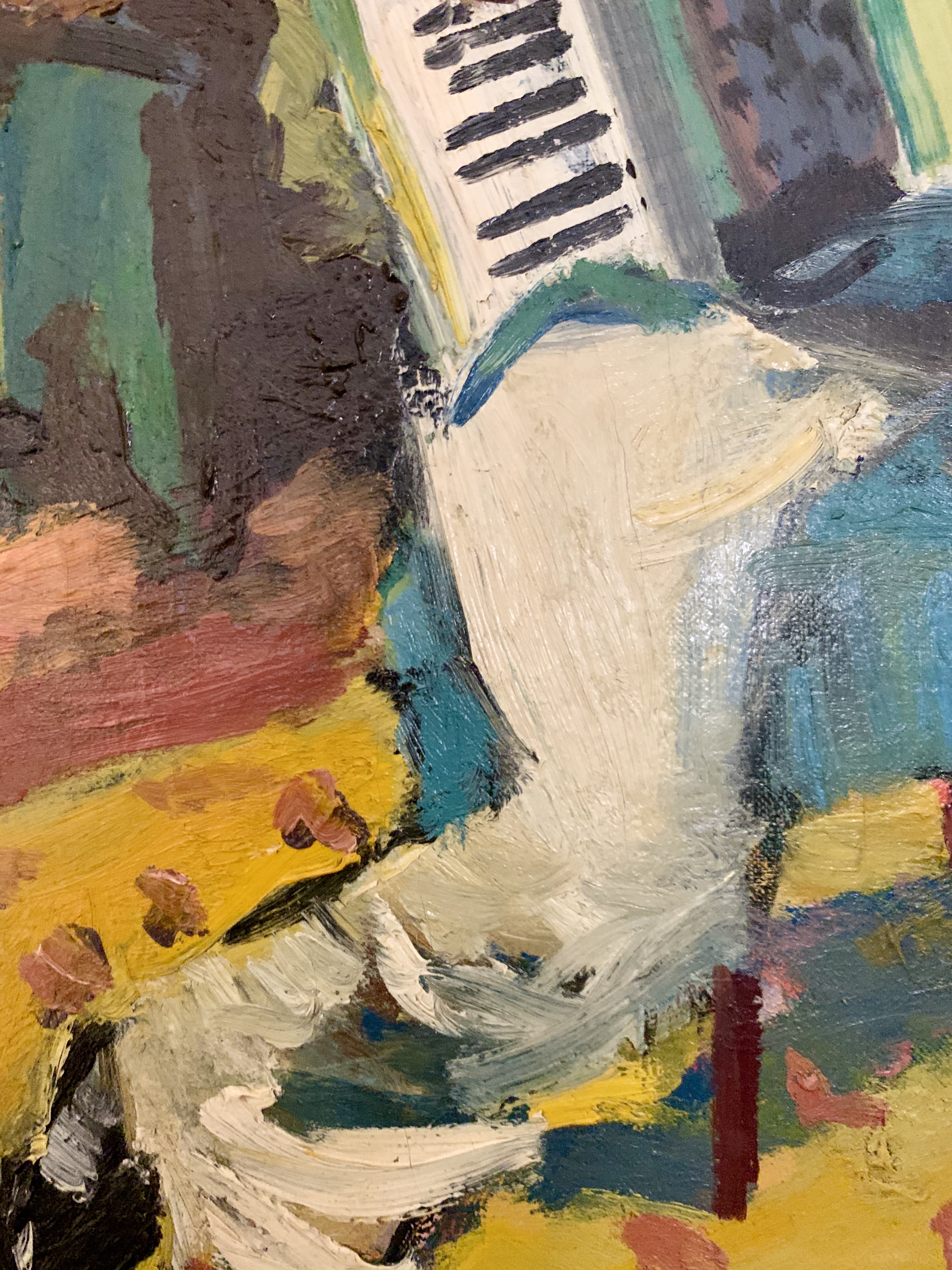
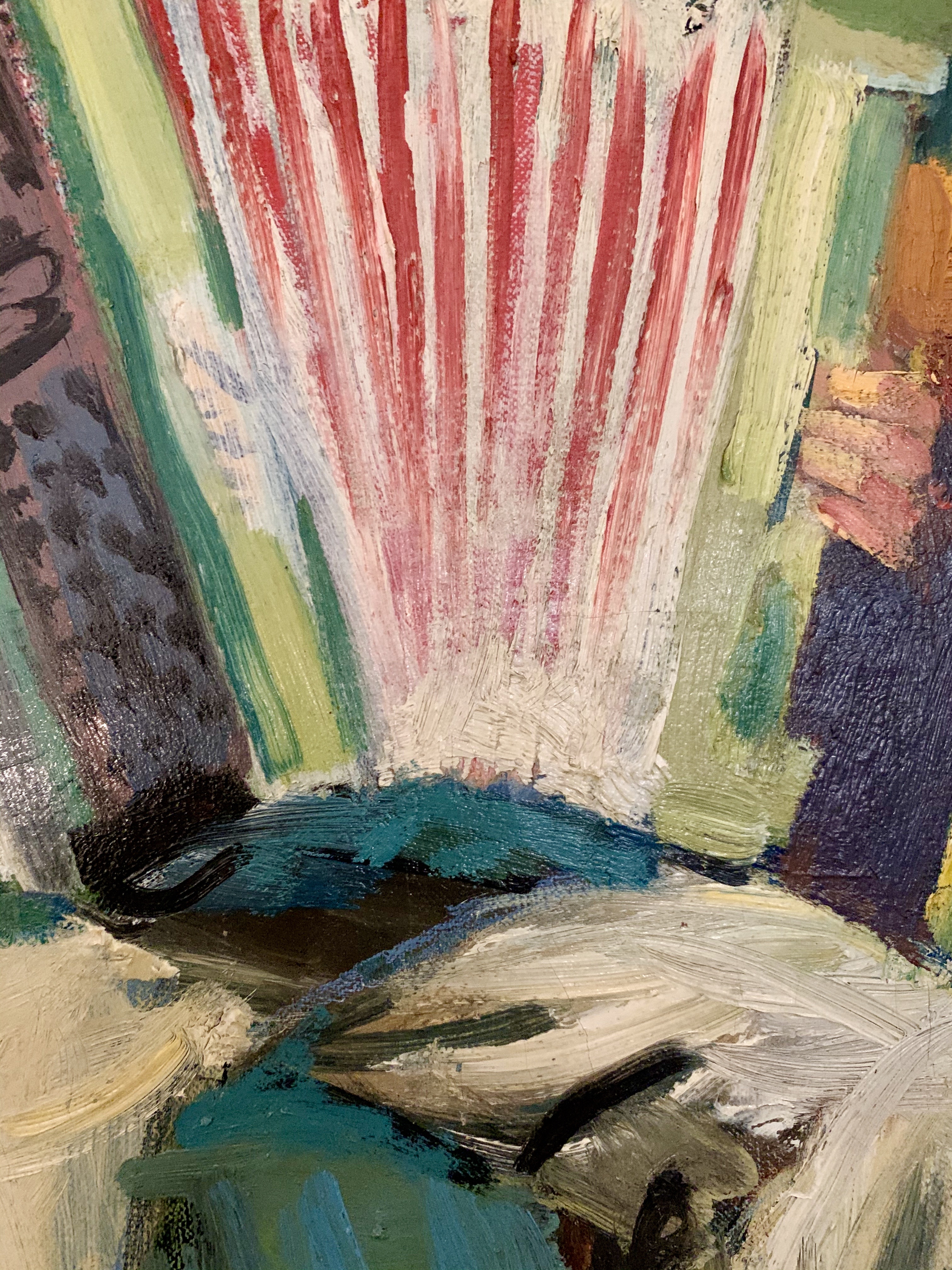
After several of my weekly visits, during which I couldn’t help but notice that odd Bowden again, it all hit me at once — just how fabulous the painting really was. I couldn’t believe I hadn’t seen it right away. The elongated figure playing the accordion ceased to be a figurative painting for me and instead turned into an assortment of colorful abstract paintings pieced together to make the figure. The color was stunning. For a painting that must have dated to the early or mid 30s, just after Bowden had his first shows at the California Palace of the Legion of Honor and at the Paul Elder Gallery in San Francisco, it had a freshness that was palpable. Suddenly I wanted to own the painting and feared it had already been sold. As it turned out, all my earnings for teaching that class at the Art Institute went right into buying that painting. And I’ll tell you, I’m certain I got the better part of the bargain.
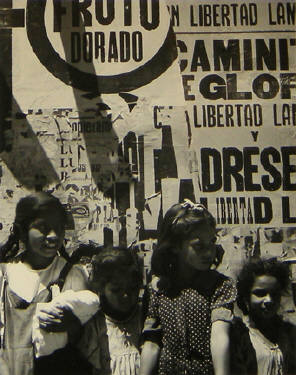
Harry Bowden, Street Children, Mexico 1941, gelatin silver print, 9.75″ x 7.75″, George Krevsky Gallery collection.
As is often the case, once I purchased the painting everyone looked closer at it and became enchanted by it. Years later, it still holds up for me because it makes a visual music that splashes color off the canvas. It pops off the wall. Look closely and you’ll see Franz Kline in there, you’ll see Hans Hoffman, and others. It’s a remarkably mature work for a young painter, who was probably in his late 20s when he made it.
It’s worth noting that the canvas lacks any of the simplistic qualities of social realism or the stylization of art deco and mural work. But the subject matter, depicting a man engaged in recreation or entertainment, epitomizes the beauty of WPA work – that it can elevate seemingly unworthy people and events into legitimate subjects for works of art. The departure from portraits of aristocrats, church paintings or staid landscapes to depictions of the common man or worker is a pivotal moment in art history. Here Bowden does it fusing both WPA and Abstract Expressionist styles. He manages to paint both these histories in the same canvas because he infuses the figure with smaller abstract canvases into that single figure, in effect, meshing together these two movements. By doing so he projects the figure into motion and helps the viewer imagine the accordion’s sound.
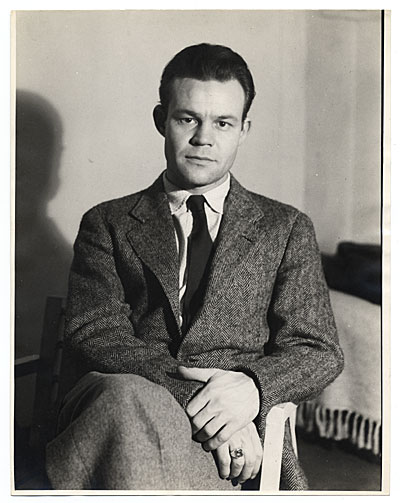
Harry Bowden.
In an exhibition brochure for a show at the New School for Social Research in 1940, Bowden expressed the sentiment that led him into joining the American Abstract Artists and illustrates his method:
“An artist, who only portrays a geometric arrangement of colored forms he has in mind, contributes nothing more than the artist who tries to copy nature. They show us the possibilities of a painting, but do not fulfill the promise…. A painting embraces many ideas, symbols, forms, tones, and colors, but all are resolved into a new thing. The metamorphosis make the painting real—gives it a life of its own.”
The painting I first thought was boring is in fact, the most radical painting I own. And it reminds me of how much artists working today are indebted to this earlier, and youthful, leap into abstraction.
–Matt Gonzalez
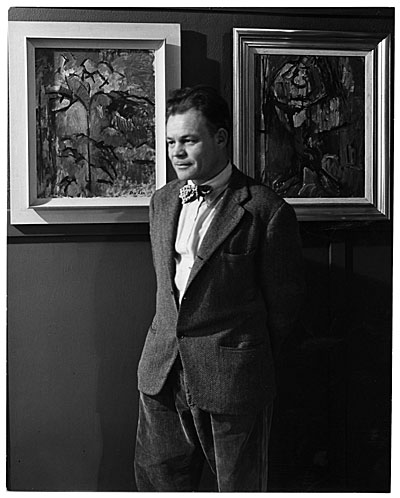
Harry Bowden poses with his painting at a show at the Louvre Gallery, San Francisco, January 4, 1951.
Harry Bowden at the Archives of American Art.
Details of Bowden’s Accordion Player:
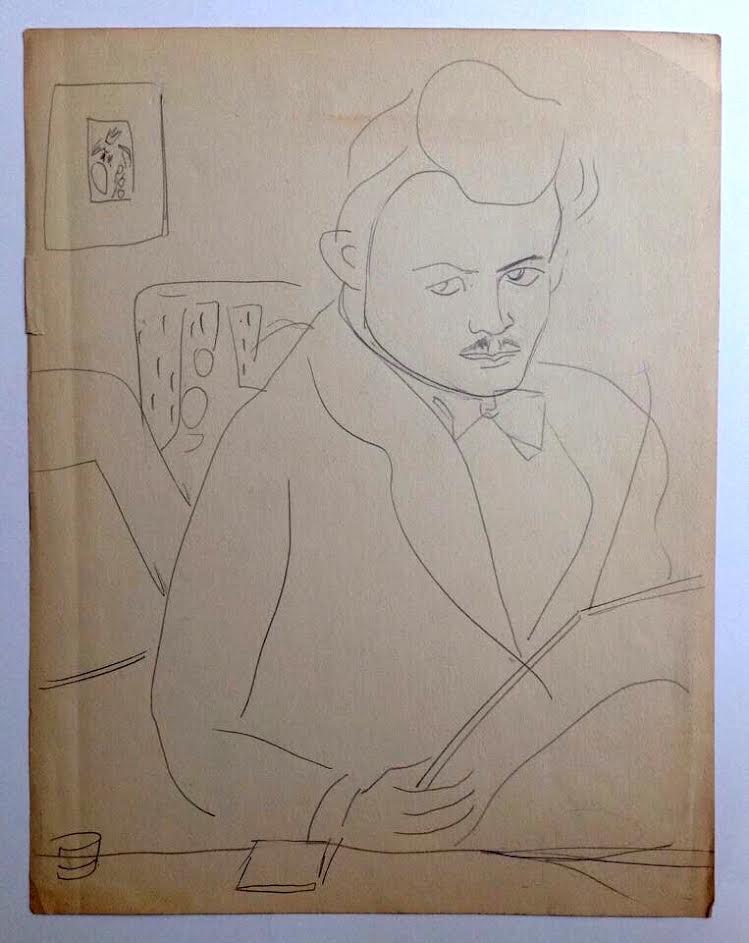
Harry Bowden, Self-Portrait, graphite, c 1940. Collection of Matt Gonzalez.
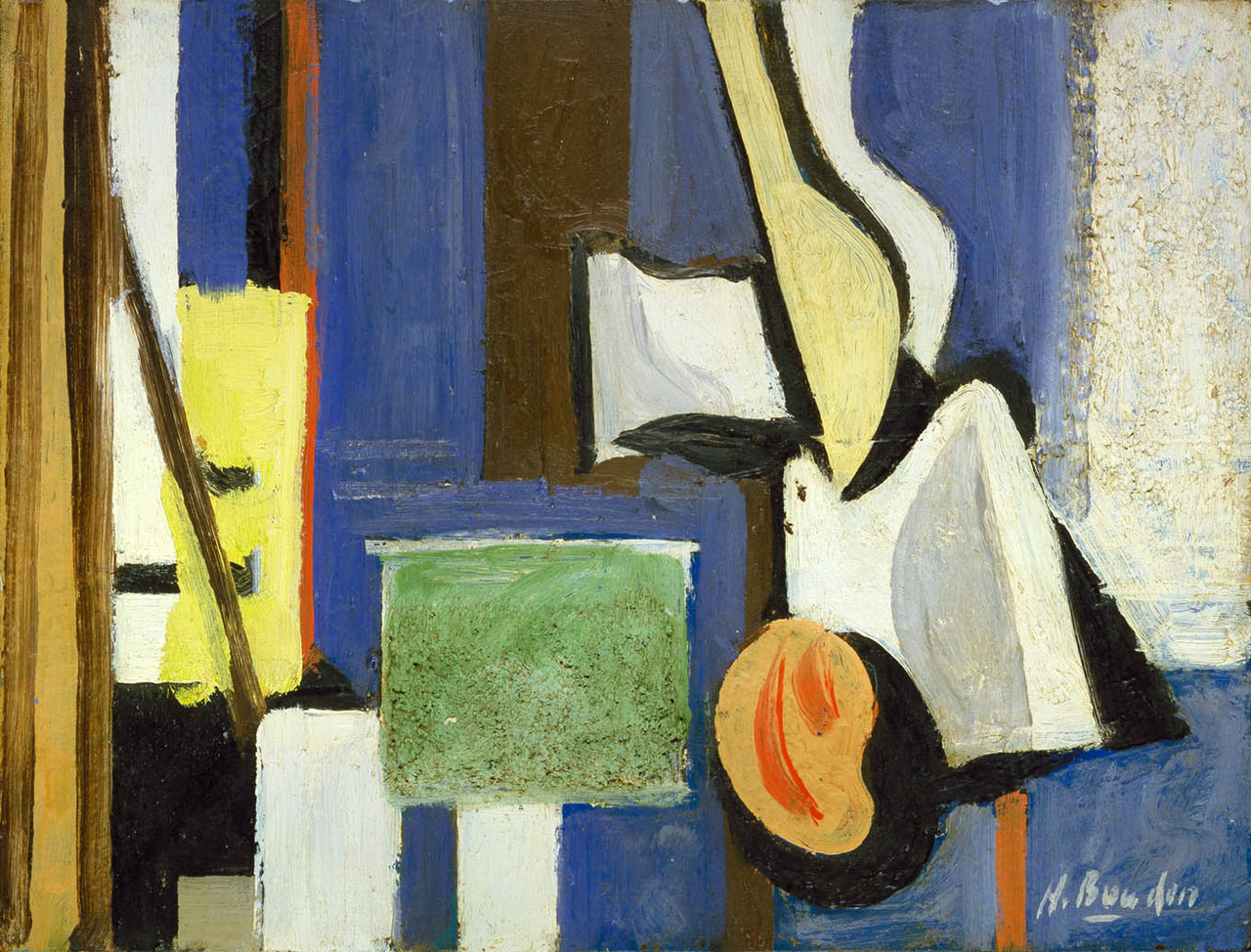
Harry Bowden, Number 47, oil on canvas.
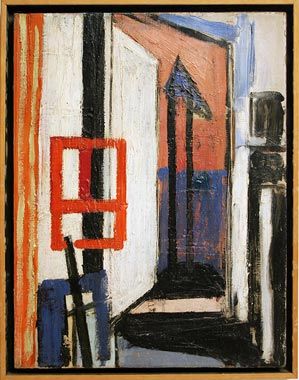
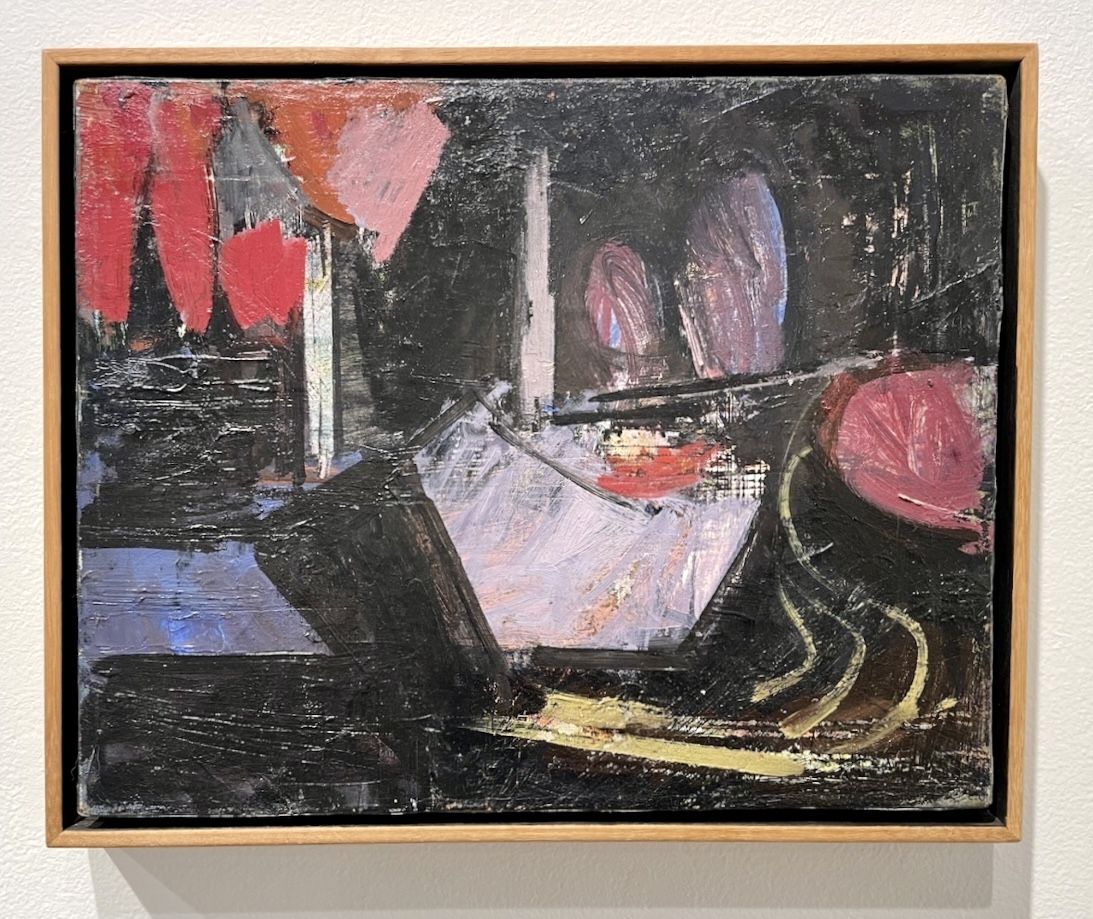
Harry Bowden, View from the Studio, oil on canvas, c. 1936.
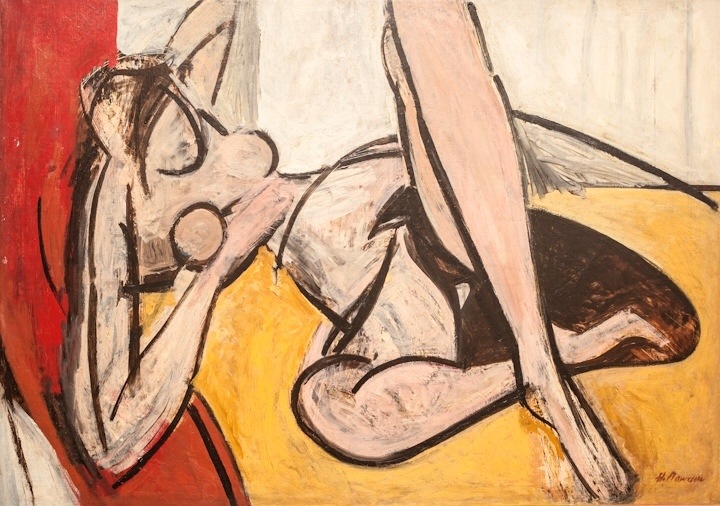
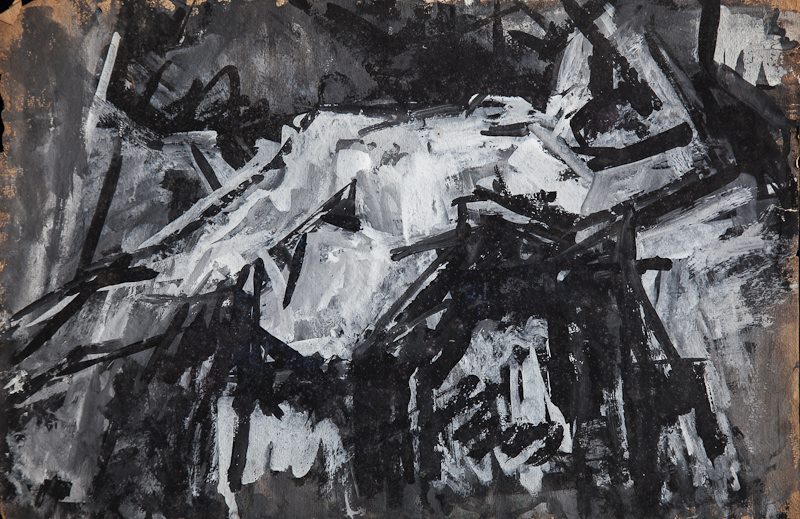
Harry Bowden, Reclining nude, c 1938, oil on canvas, Matt Gonzalez collection.
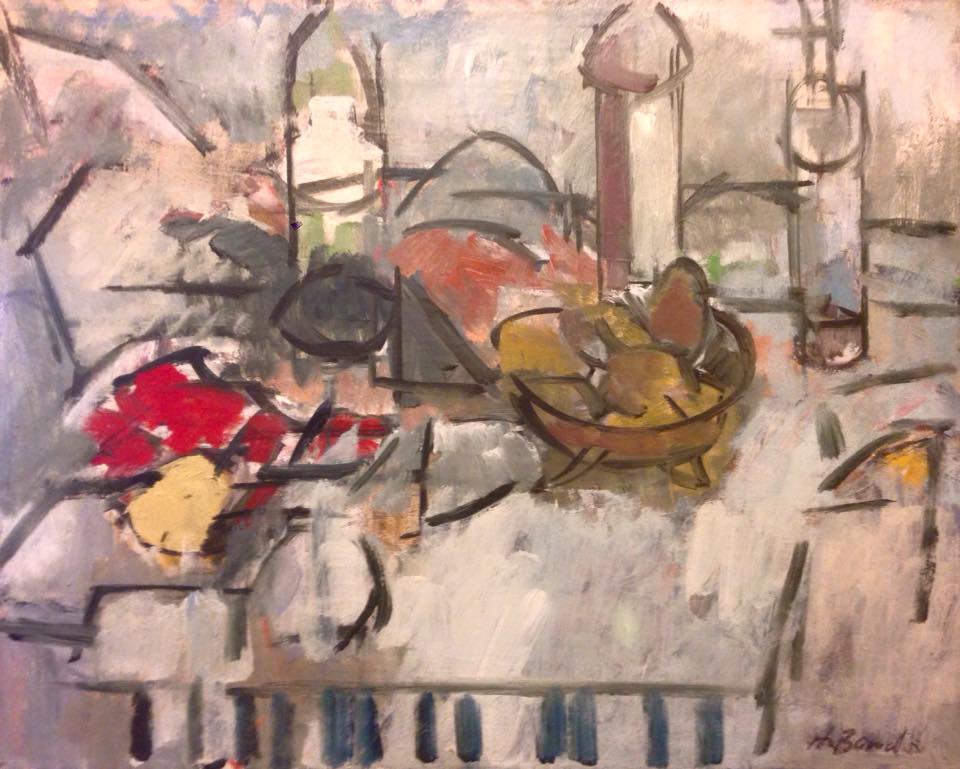
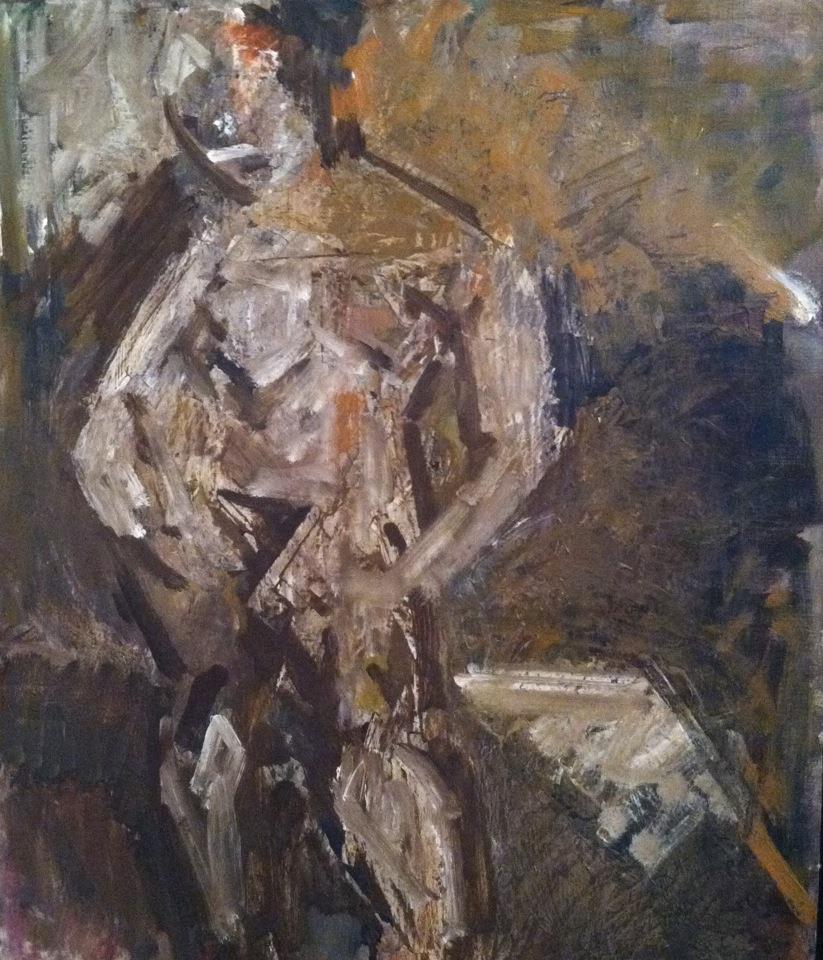
More artworks by Harry Bowden:



 Art & Politics: The Matt Gonzalez Reader
Leave a comment